
Capturing the taste
Eating, drinking and packaging go hand in hand.
Our modern lives would be unimaginable
without high quality food and efficient packaging. Examples from these two areas provide
some surprising insights into the art of capturing the taste.
Did you know?
Film material inspired by ostrich eggs
Ostrich eggs consist of breathable
material whose fine texture protects their
shells from micro-organisms. Researchers
have succeeded in emulating these two
properties in a bionic packaging film for
food. This allows the gas, generated
naturally as the fruit ripens, ethylene, to
escape, thus keeping the fruit fresh
longer. Furthermore, nanoparticles
provide protection against decay.
Long-lasting protection
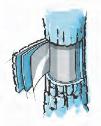
The bark of giant redwood trees is an
extremely versatile natural packaging
material. It protects the interior of tree
trunks from icy cold weather and the
extreme heat of North American forest
fires. What is more, the bark produces a
natural insecticide which guards against
attack by parasites. As a result, the trees
can reach an age of up to 3,500 years.
The ingenuous coconut
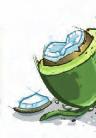
Nature shows us the way: the coconut is
one of the toughest types of fruit in the
world and has a clever form of packaging.
It can survive the fall from the top of trees
thanks to a soft fibre layer of cellulose.
The hard shell protects against parasites
and salt water. Underneath this, an elastic
membrane protects the flesh from fluid
loss.
Tough character
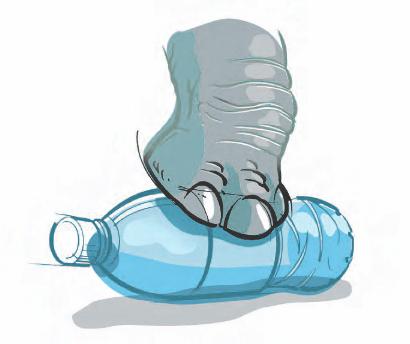
PET or polyethylene terephthalate has
become indispensable in the world of
packaging. Annual production worldwide
amounts to around 40 million tonnes.
Extremely light, tear resistant and
recyclable, it is used to make things such
as bottles, plastic film, medical products,
textiles and cosmetics casings.