Basic HTML Version




Energy efficiency in its highest
form:
With around 12,000 solar
cells, the Solar Impulse HB-SIA
is the first solar aircraft to fly
day and night without fuel.
already been successfully completed.
In July 2010, Solar Impulse made the
first night flight in the history of solar
aviation, lasting 26 hours. In May 2011,
the solar-powered lightweight aircraft
proved its ability for short-haul flights
with a 630-kilometre trip from Payerne in
Switzerland to Brussels. For Piccard,
who in 1999 made the first non-stop
round-the-world balloon flight, this
represents a major milestone in aviation
history. It was this world record trip that
inspired him to develop Solar Impulse.
After around 20 days of continuous flying,
the balloon’s fuel supply almost ran out
shortly before reaching its destination.
With the sun as an inexhaustible energy
source, this should never happen again.
Energy from 12,000 solar cells
For the round-the-world trip in 2014,
Piccard and Borschberg are building a
new machine specially adapted to long-
haul conditions. It will even exceed the
already impressive values achieved
by the current prototype HB-SIA.
The HB-SIA is a cantilever high-wing
aircraft with four electric motors, which
power the twin-bladed propellers at
a speed of 200 to 400 rpm. Current is
supplied by around 12,000 solar cells.
With a wingspan of 64 metres, the Solar
Impulse is almost as wide as an Airbus
A340. Whereas the jet has an average
take-off weight of 300 tonnes, the solar
aircraft weighs 1,600 kilograms at take-
off, which is not much heavier than an
average-sized car. Solar Impulse reaches
a maximum altitude of 8,500 metres at
an average flying speed of 70 kilometres
per hour. Any comfort must take second
place to the required drive energy,
however. Passengers must wear warm
clothing to protect themselves against
the cold.
www.solarimpulse.com
A brave vision
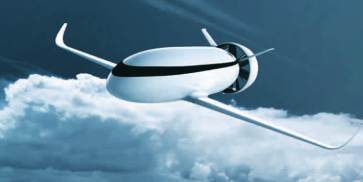
According to aircraft manufacturer EADS, the passenger aircraft of
the future will be battery-powered. EADS presented the “VoltAir”
fully electric drive concept at the Paris Air Show Le Bourget 2011.
This research project brings the vision of a zero-emissions, ultra-
light aircraft a step closer to becoming a reality. This could feasibly
happen within the next 20 years. VoltAir passengers will benefit
from the extremely low noise levels of the engines.
Hybrid takes off
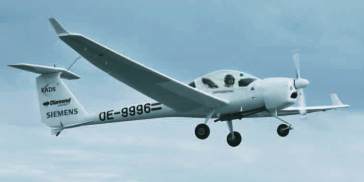
Siemens, Diamond Aircraft and EADS have developed the world’s
first aircraft with serial hybrid electric drive. The new drive train
was tested in the “DA36 E-Star” motor glider. The E-Star uses a serial
hybrid electric drive, which until now was only found in cars. A 70 kW
electric motor from Siemens powers the propeller. The required
electricity is supplied by a small engine with a generator. Fuel
consumption is very low since the combustion engine always runs
with a constant low output of 30 kW. A battery system provides the
increased power required during take-off and climb.
Naturally efficient
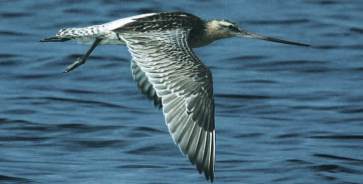
A unique undertaking in distance records starts every year in west-
ern Alaska, when the world’s best long-distance flier prepares for
a very special non-stop journey to the other side of the world.
The most resilient bar-tailed godwits can fly the 11,500 kilometres
from America’s far north to New Zealand in just 10 days without
stopping. This amazing feat is possible thanks to the perfect
combination of bodyweight, aerodynamics and wingspan as well
as an intelligent choice of route.
Phot
o: S
ieme
ns
Phot
o E
: ADS
1.2012
trends in automation
Compass
14 – 15