Basic HTML Version


Energy used efficiently
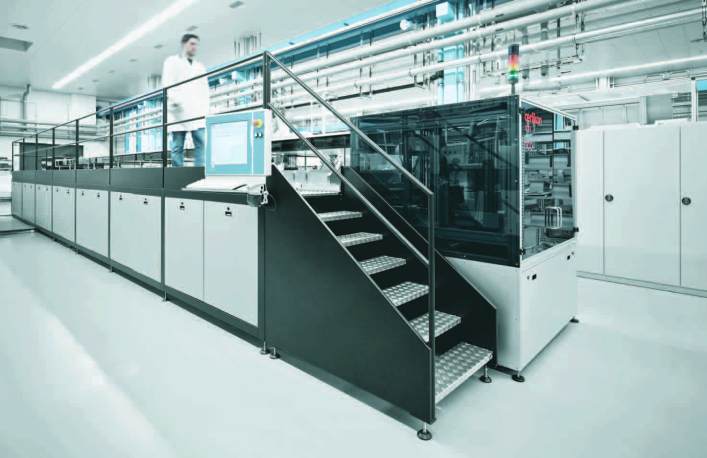
The TCO deposition system is part of the ThinFab™ production line.
According to Oerlikon Solar, it allows production of renewable energy at
grid parity costs for the first time. The future certainly looks bright for
Oerlikon Solar with its silicon-based thin-f ilm technology. The energy
amortisation period is just under a year. A finished module consequently
only needs to be used for less than one year for all the energy costs of the
production process to be recouped. Wafer-based modules, on the other
hand, require two to three years.
In Oerlikon Solar’s view, the zinc oxide-based method is also better than
other thin-film technologies, which use scarce and therefore expensive raw
materials such as tellurium (cadmium telluride) or indium (CIS/CIGS) and can
be problematic when it comes to disposal due to the toxicity of cadmium as
a raw material.
Thin film outperforms wafer
In an analysis conducted in 2010 by French investment bank BNP Paribas,
thin-film photovoltaics were rated as a lower-cost technology compared with
crystalline, wafer-based photovoltaics. It takes just a year for an investment
in thin-film technology to be amortised, as compared to between two and
three years for wafer-based systems.
The energy yield is higher and thin-film modules generate more energy than
wafer-based modules when there is less solar radiation. The performance of
wafer-based modules deteriorates at high temperatures, but remains virtu-
ally constant in the case of thin-film modules. Production costs for thin-film
modules are also lower in comparison with wafers.
The new TCO deposition system
applies electrically
conductive, transparent coatings made from zinc oxide.
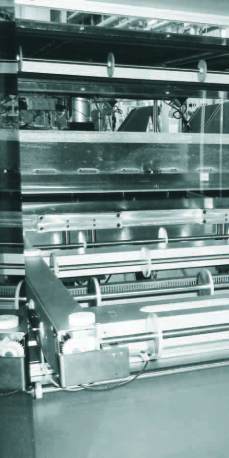
The pneumatic components make the
lift easy to adjust. The toothed belt
axis for the guide is a ready-to-install
unit for quick and simple construction.
The axis has already successfully proven
its reliability with a tested service life of
5,000 km.
Nitrogen instead of compressed air
A unique feature of the system is the
open-loop and closed-loop control me-
dium of the pneumatic system. Instead
of using compressed air, Oerlikon Solar
operates the TCO system with pure nitro-
gen. “We can thus keep the vacuum and
gas supply system free of contamination,”
says Clauss. “The pneumatic components,
such as the MS series service units, tub-
ing and fittings, also perform well with
pure nitrogen.”
Also included is the fast and dynamic
flow sensor for liquids SFAW. It measures
the flow rate, consumption and tempera-
ture of the water cooling in the system
chambers. What makes this solution
really clever is the ability of the sensor
to control the volume of cooling water as
required. More cooling water is supplied
when temperatures in a process chamber
are high and less when they are lower.
The Festo sensor thus contributes to the
efficient use of energy and has perma-
nently reduced the operating costs of
the system.