Basic HTML Version


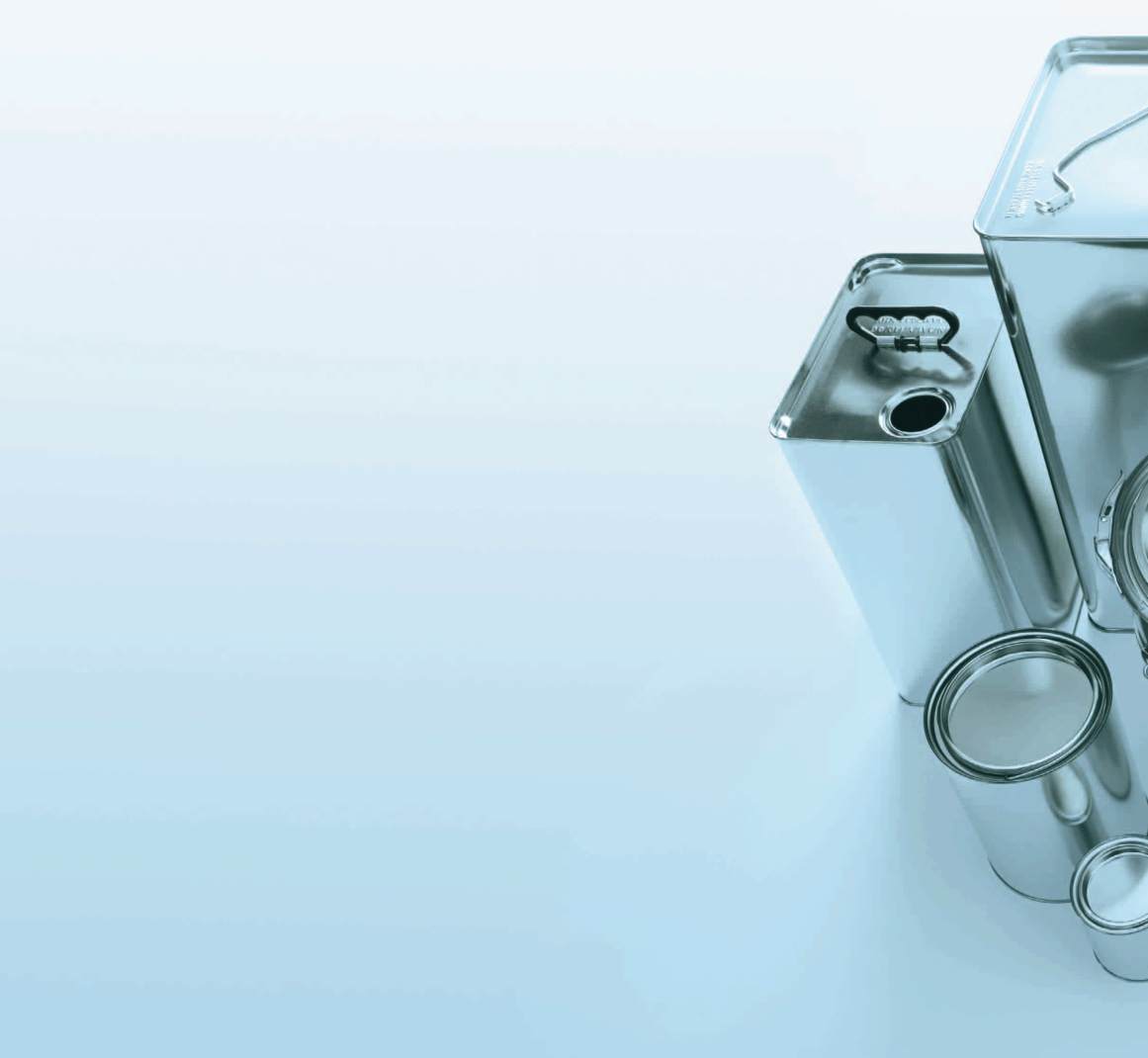
Every gram counts
The amount of waste produced in the manufacture
of a single
unit of tin packaging is no more than a few grams. However,
when multiplying this by millions of units, it amounts to a con-
siderable volume of valuable metal. Huber Packaging Group and
Festo Didactic together managed to significantly improve material
efficiency by conducting detailed material flow analyses.
Improved material efficiency for packaging
L
ever lid cans or canisters are rarely
regarded as valuable objects. They
are mostly just a means to an end,
such as for transporting and storing
products. Once the paint, oil, cheese,
beer or pickles have been used up, the
packaging has fulfilled its purpose and is
recycled. However, it should be remem-
bered that behind every item of metal
packaging lies an extensive and complex
production process, which demands the
highest levels of quality and efficiency.
Millions of euros worth of materials
In order to be better able to meet
demands for greater material efficiency,
Huber Packaging Group GmbH partici-
pated in the VerMat programme of the
German Materials Efficiency Agency
(demea) at two of its plants. The aim
of the “Analysis of start-up and quality
losses in component manufacturing”
project was to identify potential for more
economical use of tin and chrome plate
and thus to make the company’s busi-
ness processes more efficient. It proved
to be an extremely worthwhile exercise.
Huber Packaging Group processes tens
of thousands of tonnes of tin plate to
create metal packaging every year. This
corresponds to a material value of tens
of millions of euros.
Putting processes to the test
The manufacture of tin packaging pro-
duces a certain amount of waste from
cuttings and rejects. To reduce these
losses, Huber Packaging Group under-
took a detailed analysis of its production
processes with Festo Didactic GmbH
& Co. KG Denkendorf. Every lid, every
base, every ring that did not meet the
strict quality requirements was analysed.
Were quality characteristics not met?
If so, which ones? What were the reasons
for poor quality and how could the prob-
lem be rectified?
Over 100 tonnes saved
Material flow analyses on selected pro-
duction systems provided the basis for
a sustainable improvement in efficiency.
These analyses recorded the input
material, the quantities and the weight
of the good parts as well as the waste
produced. The latter was further quanti-
fied to produce a summary in which