Was versteht man unter CAR-T-Zelltheraphie?
CAR-T-Zelltherapien verfolgen einen personalisierten Ansatz: Dem Patienten werden eigene Immunzellen, sogenannte T-Zellen, entnommen, modifiziert, vermehrt und wieder zurückgegeben, sodass das Immunsystem die Krebszellen selbst bekämpfen kann. Dieser individualisierte Behandlungsweg verspricht eine höhere Wirksamkeit und weniger Nebenwirkungen. Außerdem muss die Therapie nur einmalig erfolgen. Allerdings ist sie aufgrund ihrer Komplexität und manuellen Herstellung nur begrenzt verfügbar.

„Mit der CAR-T-Cell-Therapie haben wir ein individuelles und spezifisches Medikament gegen den Krebs basierend auf den eigenen Immunzellen.“
Prof. Dr. Dr. Guy Ungerechts, Stellv. Ärztl. Direktor Medizinische Onkologie Universitätsklinikum Heidelberg
Warum ist die Herstellung von CAR-T-Zellen so komplex und teuer?
Die Herstellung von CAR-T-Zellen ist kompliziert und umfasst viele aufeinanderfolgende Schritte: Zuerst werden T‑Zellen aus dem Blut des Patienten entnommen. Diese Zellen müssen gereinigt, aktiviert und genetisch so verändert werden, dass sie Krebszellen erkennen. Danach werden die modifizierten Zellen vermehrt und umfangreich getestet, damit sie sicher und wirksam sind. Für all das sind sterile Produktionsstätten, spezielle Geräte und gut geschultes Personal erforderlich.
Die hohen Kosten entstehen durch teure Materialien und spezielle Reagenzien sowie durch die aufwändige Infrastruktur und die vielen Tests. Außerdem wird jede Therapie individuell für einen Patienten hergestellt.
Dezentrale, automatisierte Herstellung von CAR‑T‑Zellen
Daher hat das Fraunhofer‑Institut für Produktionstechnik und Automatisierung (IPA) mit Technologie von Festo ein Automatisierungskonzept für kleine, dezentrale Produktionssysteme zur Behandlung der Immunzellen entwickelt.
Diese modularen Minifabriken ließen sich beispielsweise an Universitätskliniken betreiben, arbeiten weitgehend automatisiert und benötigen kaum Fachpersonal. Durch die Automatisierung werden Herstellungszeiten und Kosten deutlich reduziert, wodurch CAR‑T‑Therapien schneller, günstiger und für mehr Patienten verfügbar werden.
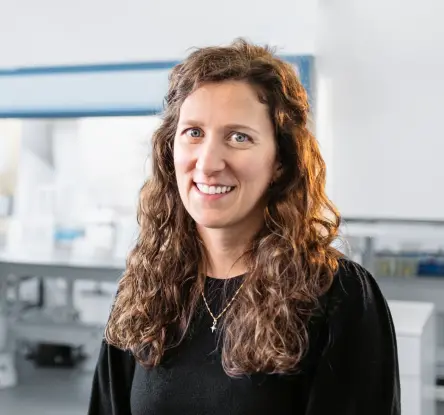
„Mit den modularen Minifabriken können wir die CAR-T-Zellen vor Ort an den Universitätskliniken herstellen.“
Dr. Andrea Gaißler, Wissenschaftliche Mitarbeiterin Fraunhofer IPA
Skalierbarkeit der personalisierten Zelltherapien
Die Minifabriken bestehen aus verschiedenen Modulen, die von den Kassetten schrittweise durchlaufen werden. Pro Patient wird für jeden Prozessschritt der Therapie eine Kassette benötigt, in der die T-Zellen die notwendigen Behandlungen erfahren. In der Kassette für den Prozessschritt zur Modifikation der Zellen sorgen Automatisierungskomponenten von Festo für präzisen Flüssigkeitstransport auf engstem Bauraum.
Die Kassette enthält ein in sich geschlossenes und steriles Fluidsystem, das alle Elemente enthält, um die Zellen zu modifizieren. Die Elemente selbst sind passiv. Sie werden von außen betrieben, wenn die Kassette in eines der Module der Minifabrik eingeschoben wird.
Präzise Flüssigkeitssteuerung dank integrierter Ventile
In der Zellkulturkammer werden die T-Zellen mit Viren in Kontakt gebracht, die Genmaterial mit dem Bauplan für sogenannte CAR-Rezeptoren einbringen. Dadurch produzieren die T-Zellen spezielle CAR-Rezeptoren und werden zu CAR-T-Zellen.
Die verschiedenen Medien müssen dafür präzise in die Zellkulturkammer dosiert, dort gemischt und temperiert werden. Das übernimmt ein Diffusion Bonded Manifold von Festo. Der Verteilerblock enthält ein Kanalsystem und verbindet darüber alle Bereiche der Kassette. Er ermöglicht den präzisen Flüssigkeitstransport. In das Manifold sind Ventile integriert, die von außen über eine Steuerluft geschaltet werden, um so die Verbindung zwischen einzelnen Elementen herzustellen.
Die Flüssigkeitsbewegung funktioniert über Schieben und Ziehen mit Druckluft oder Vakuum. Durch intelligent geregelte Druckluft können selbst kleinste Mengen präzise dosiert und innerhalb der Kassette transportiert werden – und das auf kleinstem Bauraum. Um die Kassette danach für weitere Patienten verwenden zu können, müssen nur die Elemente, die mit den Zellen und Viren in Kontakt waren, ausgetauscht werden. Das System ist so gestaltet, dass sich dies mit wenigen Handgriffen und außerhalb eines Reinraums durchführen lässt.

„Mit unseren Automatisierungskomponenten werden individualisierte Krebstherapien effizienter und kostengünstiger und können so zukünftig mehr Patienten zur Verfügung gestellt werden.“
Dr. Michael Sinsbeck, Leiter Corporate Bionic Projects Festo
Broschüre zum Download
Individuelle Zelltherapien zur Krebsbehandlung (PDF)