What is CAR-T cell therapy?
The method used in CAR-T cell therapy is based on a personalised treatment. The patient’s own immune cells, known as T cells, are extracted, modified, multiplied and returned to the body, enabling the immune system to fight the cancer cells itself. This personalised treatment promises greater effectiveness and fewer side effects. Furthermore, the treatment only needs to be carried out once. However, it is very complex and produced manually, which limits its availability.

“With CAR-T cell therapy, we have a personalised and targeted cancer treatment based on the patient’s own immune cells.”
Dr Guy Ungerechts, Deputy Medical Director of Medical Oncology at Heidelberg University Hospital
Why is it so complex and expensive to produce CAR-T cells?
Producing CAR-T cells is a complex process that involves many sequential steps. First, T cells are extracted from the patient’s blood. These cells must be purified, activated and genetically modified so that they can recognise cancer cells. The modified cells are then cultured and extensively tested to ensure they are safe and effective. All of this requires sterile production facilities, specialised equipment and well-trained staff.
The high costs are due to expensive materials and specialised reagents, as well as the complex infrastructure and the large number of tests. Furthermore, each treatment is tailored to the individual patient.
Decentralised, automated production of CAR‑T cells
That is why the Fraunhofer Institute for Manufacturing Engineering and Automation (IPA) has developed an automation concept for small, decentralised production systems for processing immune cells, using technology from Festo.
These modular mini-factories could, for example, be operated at university hospitals; they are largely automated and require very few specialist staff. Automation significantly reduces production times and costs, making CAR‑T therapies faster, more affordable and available to more patients.
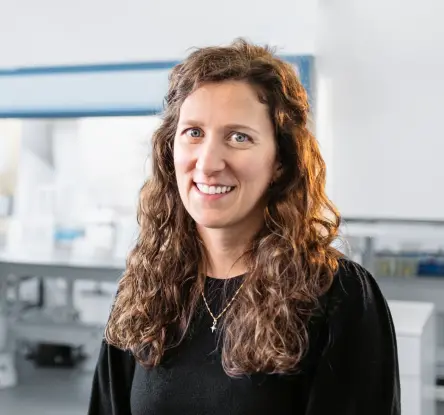
“With these modular mini-factories, we can produce CAR-T cells on site at university hospitals.”
Dr Andrea Gaißler, Fraunhofer IPA Research Associate
Scalability of personalised cell therapies
The mini factories consist of various modules that the cassettes pass through in stages. One cassette is required per patient for each stage of the process during which the T cells undergo the necessary treatments. In the cassette for the cell modification process step, automation components from Festo ensure the fluid is precisely transported within a very confined space.
The cassette has a closed, sterile fluid system that includes all the components required to modify the cells. The elements themselves are passive. They are operated externally when the cassette is inserted into one of the modules of the mini-factory.
Precise fluid control thanks to integrated valves
In the cell culture chamber, the T cells are exposed to viruses that introduce genetic material containing the blueprint for so-called CAR receptors. As a result, the T cells produce special CAR receptors and become CAR T cells.
The various media must be precisely dispensed and mixed in the cell culture chamber, and kept at the correct temperature. This is carried out by a diffusion bonded manifold from Festo. The distributor block features a channel system that connects all areas of the cassette. It enables precise liquid transport. Valves are integrated into the manifold; these are actuated externally using pilot air to establish the connection between individual components.
The fluid is moved by pushing and pulling using compressed air or a vacuum. Thanks to intelligently controlled compressed air, even the smallest quantities can be precisely dispensed and transported within the cassette – all within a very compact footprint. Only the components that have come into contact with the cells and viruses need to be replaced so that the cassette can be reused for other patients afterwards. The system is designed in such a way that this can be carried out in just a few simple steps and outside a cleanroom.

“Our automation components make personalised cancer treatments more efficient and cost-effective, making them available to more patients in the future.”
Dr Michael Sinsbeck, Head of Corporate Bionic Projects at Festo
Brochure for download
Personalised cell therapies for cancer treatment (PDF)