Umfassendes Portfolio für die Automatisierung von Prozessventilen
Benötigen Sie einzelne Komponenten zur Automatisierung von Prozessventilen oder ein komplettes, normkonformes und reproduzierbares Automatisierungspaket? Wählen Sie den Ansatz, der zu Ihrer Konstruktion passt. Dank unserer Fachkompetenz im Bereich Pneumatik, unserer breiten Produktpalette und unserer praktischen technischen Unterstützung können Sie Produkte schneller auswählen, reibungslos integrieren und die Dokumentation bei Konfigurationen mit Komponenten verschiedener Hersteller einheitlich gestalten.
Sie haben die Wahl: Einschaltventile oder Durchflussregelventile
Für Einschaltventile sorgen Sensorboxen/Endschalter für eine zuverlässige elektrische Rückmeldung und Positionsüberwachung. Für die Durchflussregelung: digitale elektropneumatische Stellungsregler bieten eine präzise Leistung und lassen sich einfach in Betrieb nehmen.
Bei Dreh- oder Linearbewegungen: Wählen Sie den richtigen Antrieb für Ihre Anwendung.
Linearantriebe eignen sich für die Steuerung von Luftklappen, den Schüttguttransport sowie die Regelung von Durchfluss und Füllständen. Optionen für Schwenkantriebe, darunter pneumatische Schwenkantriebsvarianten, sind ideal für Kugel- und Absperrventile sowie Absperrklappen in anspruchsvollen Prozessumgebungen.
Wie auch immer Sie sich entscheiden: Standardisierte Architekturen, eine umfassende Komponentenabdeckung und Unterstützung bei der Auswahl tragen dazu bei, den Aufwand und die Komplexität zu reduzieren. Außerdem verkürzen Sie die Lieferzeit durch weniger Überarbeitungsschleifen.
Ihre Vorteile:
- geringerer Aufwand bei Konstruktion und Dokumentation
- zuverlässige zweite Bezugsquelle für wichtige Automatisierungskomponenten
- markenübergreifende standardisierte und dennoch flexible Architekturen
- wirtschaftlich tragfähige Lösungen, die sich branchenübergreifend skalieren lassen
Entdecken Sie Komponenten für die Automatisierung von Prozessventilen
Drehantriebe für präzise Drehbewegungen und hohe Drehmomentleistung
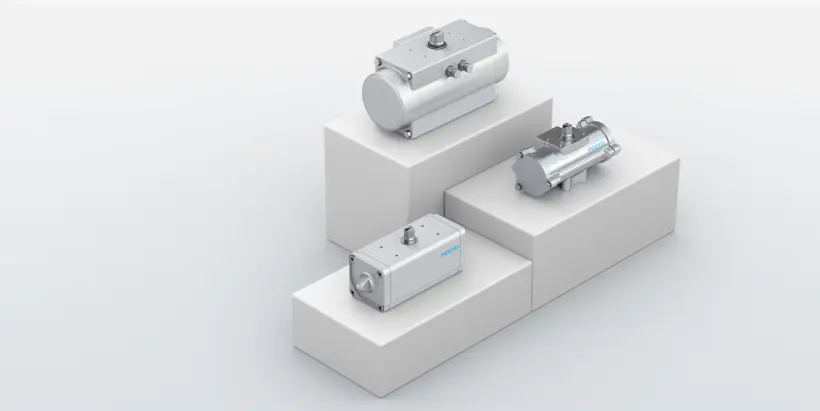
Die Schwenkantriebe DFPD sind als Einzelkomponenten oder als Teil eines kompletten automatisierten Prozessventilsystems erhältlich. Die Schwenkrichtung kann nach links oder rechts eingestellt werden, um bei einfachwirkenden Ausführungen die Funktion „Fail Open“ oder „Fail Close“ festzulegen. Die Ventilanschaltung nach ISO 5211 sowie die NAMUR-Montage erleichtern den Einbau von Magnetventilen, Sensoren und Stellungsreglern. Vernickelte oder rostfreie Wellen sorgen für eine längere Lebensdauer, während die Rebreather-Funktion des Vorsteuerventils die Federn in korrosiven Umgebungen schützt. Zu den Optionen gehören Standard-, epoxidbeschichtete und eloxierte Aluminiumgehäuse.
Linearantriebe für präzise lineare Bewegungen und Positionssteuerung
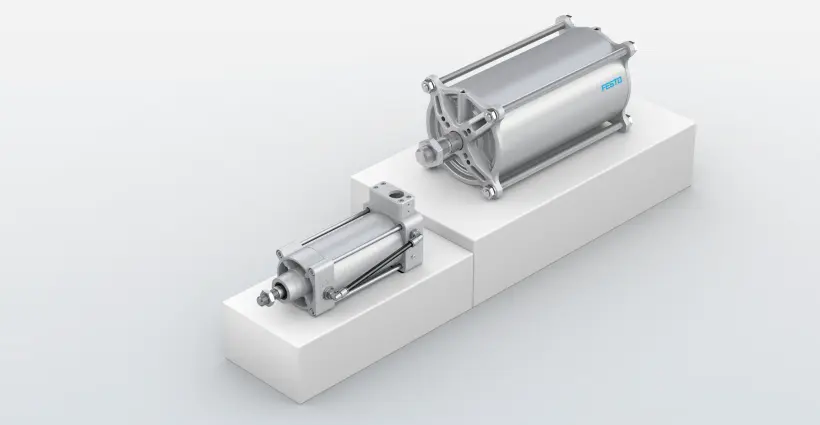
Über die Automatisierung von Schwenkantrieben hinaus sind viele Prozessaufgaben auf eine präzise lineare Positionierung, beispielsweise zur Regelung von Durchfluss und Füllständen oder zur Steuerung von Luftklappen angewiesen. Unsere Linearantriebe mit Schnittstellen nach ISO 5210 und 15552 verbinden robuste Mechanik mit Konfigurationsmöglichkeiten für Ein-/Aus- oder Regelungsaufgaben über ein integriertes Wegmess-System. Dank des hohen Schutzes vor äußeren Einflüssen (IP65/IP67/IP69K) und der ATEX-Zulassungen können Sie geeignete Prozessventile zusammenstellen, die unter rauen Betriebsbedingungen zuverlässig arbeiten.
Ventil-Stellungsregler und Rückmeldesysteme für die Prozessstabilität
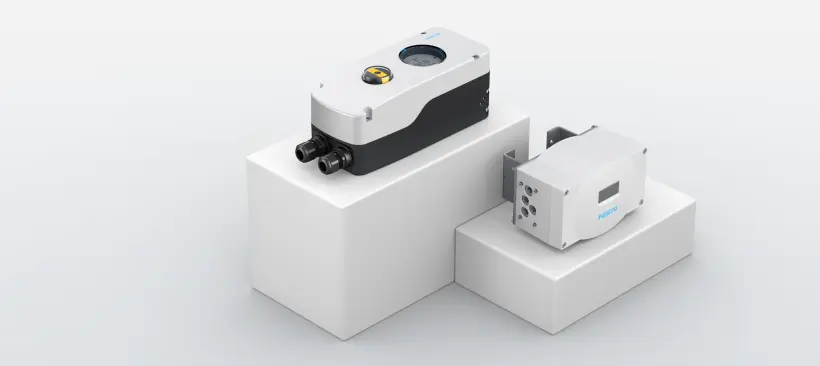
CMSX und CMSH von Festo sind zuverlässige, hochpräzise Stellungsregler für Linear- und Schwenkantriebe, egal ob klein oder groß, einfach- oder doppeltwirkend.
CMSX ist die wirtschaftliche Wahl für nicht explosionsfähige Bereiche und bietet definierte Sicherheitsstellungen (Auf/Zu/Halten) sowie voreingestelltes Not-Aus-Verhalten, um Prozessrisiken zu minimieren.
CMSH ist der vielseitige Allrounder mit HART-Kommunikation für eine schnelle und präzise Regelung. Standardisierte Schnittstellen, intelligente Installationskonzepte, eine übersichtliche Klartextanzeige und integrierte Selbstüberwachung gewährleisten einen zuverlässigen Betrieb und ermöglichen eine schnelle Statusüberprüfung sowie eine unkomplizierte Inbetriebnahme.
Endschalter für zuverlässige Positionserkennung und Maschinensicherheit
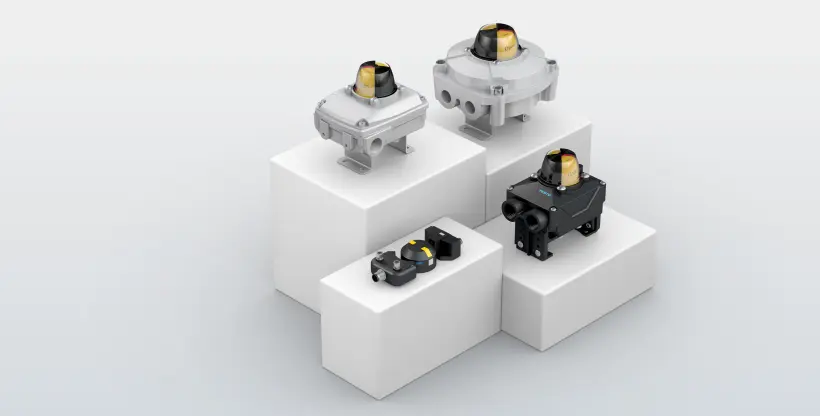
Endschalterboxen nach VDI/VDE 3845 werden zur elektrischen Rückmeldung und zur Positionssteuerung von Prozessventilen verwendet, die durch pneumatische Schwenkantriebe betätigt werden. Egal, für welche Sensorbox Sie sich entscheiden – alle sind für eine schnelle und einfache Montage konzipiert, um den Installationsaufwand zu reduzieren. Unser Sortiment umfasst:
- robuste Konstruktionen für raue Umgebungsbedingungen
- Ausführungen mit hoher Chemikalienbeständigkeit
- Varianten, die für explosionsfähige Bereiche geeignet sind
- kompakte Lösungen für beengte Einbauräume
Vorsteuerventile für eine schnelle pneumatische Steuerung und eine effiziente Ventilbetätigung
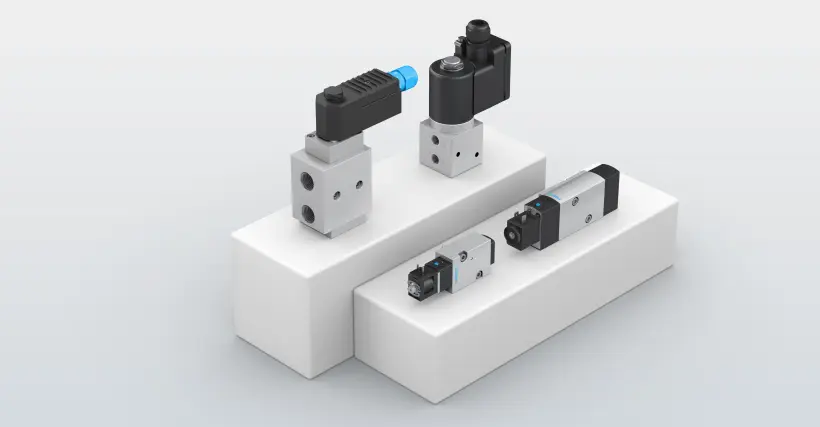
Unsere NAMUR-Vorsteuerventile sind ideal für einfach- und doppeltwirkende Schwenk- und Linearantriebe. Sie sind dafür ausgelegt, Prozessventile und Stellantriebe sicher und zuverlässig zu automatisieren und zu steuern. Unser Sortiment umfasst:
- Lösungen für einfach- und doppeltwirkende Antriebe
- Ex-zugelassene Ausführungen für explosionsfähige Bereiche
- Varianten, die äußerst robust und korrosionsbeständig sind
- Varianten für sicherheitsorientierte Systeme bis hin zu SIL 3
Zubehör: Schläuche, Anschlüsse, Montagesätze und Luftaufbereitungseinheiten
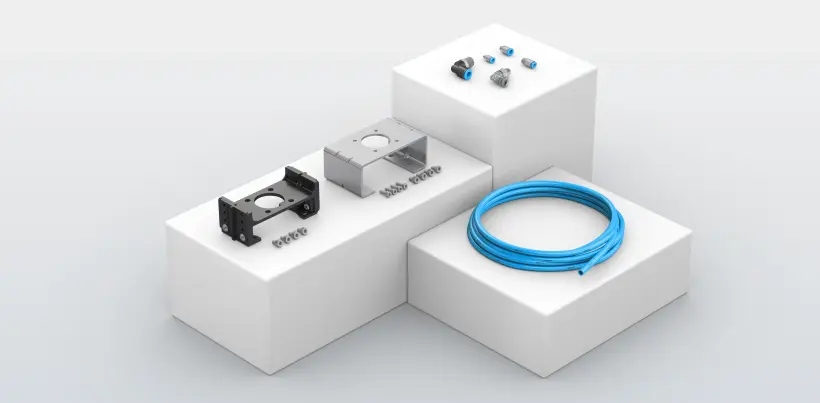
Unser Zubehör lässt sich einfach montieren und optimiert die pneumatische Leistung der Komponenten, während es gleichzeitig die langfristige Zuverlässigkeit des Systems erhöht. Richtig ausgewähltes pneumatisches Zubehör reduziert Leckagen, stabilisiert den Druck und vereinfacht die Montage. Diese Komponenten sind in einer Vielzahl unterschiedlicher Ausführungen erhältlich.
Entdecken Sie unser Schlauchsortiment
Ihr Partner für die Automatisierung von Prozessventilen
Der Erfolg der Automatisierung von Prozessventilen hängt nicht nur von einzelnen Bauteilen ab; es bedarf eines Partners, der Gesamtsysteme, Branchenanforderungen und die langfristige Betriebsleistung versteht, um hochwertige Konstruktionen zu realisieren. Von der Unterstützung bei der Planung und Inbetriebnahme bis hin zu Lebenszyklus-Dienstleistungen erhalten Sie alles, was Sie benötigen, um die Komplexität zu reduzieren, die Zuverlässigkeit zu verbessern und die Leistung langfristig zu sichern.
Vorschriften und Normen in der Ventilautomatisierung
Zu gewährleisten, dass Produkte und Lösungen die Compliance-Anforderungen erfüllen, ist der Schlüssel zum Erfolg. Da jede Anforderung ihre eigenen Standards mit sich bringt, benötigen Sie möglicherweise SIL für Sicherheitsfunktionen, ATEX-zertifizierte Varianten für explosionsfähige Bereiche sowie die richtigen Lösungen für hygienekritische Umgebungen (z. B. Produktkontakt- vs. Spritzbereiche). Da sich diese Themen oft überschneiden, muss die Ventilbaugruppe eine Reihe von Anforderungen erfüllen.
Standardisierte Schnittstellen und umfassende Kompatibilität
Integrationsprobleme verursachen höhere Kosten und sind zeitaufwendig. Standardisierte Schnittstellen und Zubehörteile im gesamten Portfolio der Prozessautomatisierung tragen dazu bei, den Integrationsaufwand zu reduzieren. Die Kompatibilität mit zahlreichen Prozessventil-Herstellern und die flexible Konstruktion mit branchenüblichen Befestigungen reduzieren den Entwicklungsaufwand und gewährleisten die Zukunftsfähigkeit der Systeme.
Alles aus einer Hand – ganz einfach:
- Vom Ventil zum Stellantrieb: ISO 5211 für Schwenkantriebe; ISO 5210 und ISO 15552, wenn lineare Schnittstellen verwendet werden
- Vom Stellantrieb zum Vorsteuerventil: NAMUR (VDI/VDE 3845) für eine einheitliche Integration der pneumatischen Steuerung
- Vom Stellantrieb zum Stellungsregler oder Endschalter: VDI/VDE 3845-1 und 3847-2 sind weit verbreitete Normen für Sensor- und Feedback-Schnittstellen
- Zubehör: Bereitstellung einer standardisierten Methode zur Befestigung einer Vielzahl von Komponenten
Auslegungstools für eine schnellere und zuverlässigere Produktionsauswahl
Unsere Auslegungstools sollen die Produktauswahl vereinfachen und effizienter gestalten. Sie unterstützen Sie bei der Auswahl der richtigen Konfiguration für Ihre Anwendung, von der Wahl der richtigen Größe und des richtigen Drehwinkels bis hin zur Festlegung von Funktionen wie doppeltwirkendem oder einfachwirkendem Betrieb. Darüber hinaus können Sie Materialoptionen und Oberflächenbehandlungen spezifizieren, um sicherzustellen, dass die Produkte in Ihrer Betriebsumgebung optimal funktionieren. So können Sie schnell die richtige Lösung finden, Konfigurationsfehler reduzieren und Ihren Entwicklungsprozess optimieren.
Digitale Integration in Prozessautomatisierungssysteme
Ein nahtloser Datenaustausch auf höchster Steuerungsebene ist von entscheidender Bedeutung. Der Stellungsregler CMSH kommuniziert direkt mit Steuerungssystemen von Drittanbietern und ermöglicht so einen effizienten Datenaustausch sowie Systemtransparenz.
Komponenten, die für Industrie-4.0- und IoT-Umgebungen konzipiert sind, können Informationen mit dem zentralen Steuerungssystem austauschen und ermöglichen so eine erweiterte Diagnose und Leistungsüberwachung. In Kombination mit Lösungen wie Festo AX für Zustandsüberwachung und vorausschauende Instandhaltung sorgt dies für mehr Transparenz, verbessert die Zuverlässigkeit und optimiert die Systemleistung über den gesamten Lebenszyklus hinweg.
Weltweiter Versand, Verfügbarkeit und Support während des gesamten Lebenszyklus
Automatisierungsprojekte erfordern eine zuverlässige Versorgung mit Betriebsmitteln sowie kontinuierlichen Support. Dank unserer weltweiten Präsenz und starker regionaler Lieferketten haben Sie weltweit Zugang zu Komponenten und Lösungen. Mit Dienstleistungen über den gesamten Produktlebenszyklus hinweg unterstützen wir Sie bei der Ersatzteilverwaltung, der Planung von Modernisierungen und stellen Ihnen technisches Fachwissen für die gesamte Lebensdauer Ihrer Anlage, standortübergreifend und für zukünftige Erweiterungen zur Verfügung.
Bewährter Einsatz in regulierten Branchen
In regulierten Umgebungen wie der Lebensmittel- und Getränkeindustrie, chemischen Verarbeitung sowie Wasser- und Abwasserwirtschaft sind Sicherheit, Zuverlässigkeit und die Einhaltung von Vorschriften unverzichtbar. Unsere Automatisierungslösungen für Prozessventile basieren auf einem umfassenden Verständnis der Branchenstandards, der Betriebsdrücke und der langfristigen Leistungsanforderungen.
Häufig gestellte Fragen
1. Welche Antriebstechnik eignet sich für die Anwendung: Scotch-Yoke- oder Zahnstangenantrieb?
Dies hängt hauptsächlich von der Drehmomentkurve, dem Einbauraum und der Anwendung ab. Scotch-Yoke-Antriebe eignen sich besonders für Anwendungen, bei denen sehr hohe Drehmomente an bestimmten Positionen des Schwenkbereichs erforderlich sind, beispielsweise beim Öffnen oder Schließen von Armaturen. Zahnstangenantriebe hingegen zeichnen sich durch eine beeindruckend kompakte Bauweise und eine gleichmäßigere Drehmomentkurve aus und sind in kostengünstigen Standardausführungen erhältlich. Die endgültigen Auswahlkriterien richten sich daher nach den erforderlichen Ventileigenschaften, dem Wartungsaufwand, den Platzverhältnissen und den Kosten.
2. Wie berechnet man die Kräfte und Drehmomente für den Antrieb richtig?
Um eine zuverlässige Konstruktion zu erstellen, sollte nicht nur das Nenn-Drehmoment des Ventils berücksichtigt werden, sondern auch Sicherheitsfaktoren, Anlauf- und Losbrechmomente, Haltemomente sowie mögliche Notabschaltungen. Das Medium selbst sowie die Temperatur und die Umgebungsbedingungen beeinflussen ebenfalls die tatsächliche Belastung. Ziel ist es, den Antrieb so zu konstruieren, dass er seine Funktion auch unter realen Betriebsbedingungen sicher und reproduzierbar erfüllt.
3. Welche Anforderungen gelten für Antriebe in explosionsfähigen Bereichen?
In explosionsfähigen Atmosphären müssen Antriebe den jeweiligen Zonen, Zündschutzarten und Temperaturklassen entsprechen. Dies hat direkte Auswirkungen auf die Auswahl von Materialien, Abdichtungen und Zubehör. Es ist unerlässlich, dass sowohl der einzelne Antrieb als auch die Gesamtlösung alle relevanten Funktions-, Umwelt- und Sicherheitsanforderungen erfüllen.
4. Welche Rolle spielt ein Vorsteuerventil bei der Automatisierung von Prozessventilen?
Das Vorsteuerventil steuert den pneumatischen Betrieb des Stellantriebs und übernimmt somit wichtige Funktionen wie Schalten und Entlüften; außerdem kann es zur Umsetzung von Konzepten zur Ausfallsicherheit eingesetzt werden. Es wirkt sich auch auf das Reaktionsverhalten und die Zeit aus, die zur Betätigung der gesamten Einheit benötigt wird. Es handelt sich somit um ein wichtiges Verbindungsglied zwischen dem Steuerungssystem und dem pneumatischen Antrieb.
5. Wie ermittelt man den geeigneten Durchfluss für ein Vorsteuerventil?
Die Wahl des Durchflusses hängt von der Zeit und der Kraft ab, die für eine zuverlässige Betätigung erforderlich sind. Neben dem Antrieb spielen auch die Schlauchlängen, eventuelle Druckverluste und das Zusammenspiel mit den anderen pneumatischen Komponenten eine wichtige Rolle. Eine geeignete Konstruktion trägt dazu bei, das Schaltverhalten anzupassen, und verbessert die Prozesssicherheit sowie den Energieverbrauch.
6. Was ist bei der Verwendung von Vorsteuerventilen in explosionsgefährdeten und sicherheitsrelevanten Anwendungen zu beachten?
In diesen Anwendungen müssen Vorsteuerventile die Anforderungen der Umgebung und die Sicherheitsfunktion erfüllen. Zu den relevanten Kriterien zählen die Zündschutzart, die Temperaturklasse, die Werkstoffe und die entsprechenden Zertifizierungen. Je nach Anwendungsbereich sind auch robuste, korrosionsbeständige oder sicherheitsrelevante Varianten sinnvoll.
7. Was sind die Hauptaufgaben eines Stellungsreglers?
Ein Stellungsregler sorgt dafür, dass die Ventilstellung genau der vorgegebenen Sollposition entspricht. Dazu vergleicht er Soll- und Istwert, gleicht Reibung oder Prozessabweichungen aus und sorgt für eine stabile, präzise Regelung. Moderne Geräte verfügen zudem über Diagnosefunktionen, die die Inbetriebnahme und den Betrieb erleichtern.
8. Welche Kommunikationsschnittstellen eignen sich für Stellungsregler?
Die erforderliche Schnittstelle hängt von der Automatisierungsarchitektur ab. Typische Optionen sind Schnittstellen mit analogen Signalen, HART-Protokollen oder anderen Bussystemen zur Integration in übergeordnete Controller. Folgende Aspekte von Stellungsreglern sind für Anwendungen von Interesse: Sie unterstützen die digitale Integration, verbessern die Systemtransparenz und erleichtern den Datenaustausch, die Diagnose und die Parametrierung.
9. Welche Vorteile bieten Stellungsregler für die Diagnose und den Betrieb?
Stellungsregler ermöglichen nicht nur eine präzise Regelung, sondern tragen auch dazu bei, den Zustand des Antriebs, der Maschine oder des Systems schneller zu erkennen, die Inbetriebnahme zu vereinfachen und den Anlagenbetrieb transparenter zu gestalten. Funktionen wie Selbstüberwachung, Klartextanzeigen oder Diagnosedaten unterstützen die Instandhaltung und Fehlerbehebung. Dadurch werden Ausfallrisiken verringert und die Prozessstabilität über den gesamten Lebenszyklus hinweg verbessert.
10. Wozu dient ein Endschalteranbau?
Ein Endschalteranbau liefert eine zuverlässige elektrische Rückmeldung über die Endlagenpositionen eines automatisierten Prozessventils. Je nach Ausführung verfügt er zudem über eine gut sichtbare Stellungsanzeige, die die Inspektion, Inbetriebnahme und Instandhaltung vor Ort erleichtert. Er ist die erste Wahl für eine klare Positionsrückmeldung.
11. Welche Sensortechnologie eignet sich am besten für den Endschalteranbau?
Dies hängt von der Betriebsumgebung und den Anforderungen ab. Verschiedene Sensoren weisen unterschiedliche Eigenschaften auf; so unterscheiden sich beispielsweise Reedschalter, induktive Sensoren und mechanische Mikroschalter hinsichtlich ihrer Lebensdauer, Vibrationsfestigkeit und Eignung für explosionsfähige Bereiche. Die Auswahl sollte daher stets auf die jeweilige Anwendung, die erforderliche Robustheit und die Art des Signals abgestimmt sein.
12. Welche Schnittstellen sind bei Endschalteranbauten wichtig?
Der wichtigste Faktor, den es zu berücksichtigen gilt, ist die Frage, wie die Rückmeldung in die bestehende Steuerungslandschaft integriert wird. Je nach Anwendungsfall kommen potentialfreie Kontakte, PNP-/NPN-Signale, NAMUR-Sensoren oder andere elektrische Schnittstellen in Frage. Standardisierte Schnittstellen und Installationsoptionen verringern den Integrationsaufwand und ermöglichen eine einfachere Anbindung an Ventile verschiedener Hersteller.
13. Wie werden die Schnittstellen zwischen Ventil, Antrieb und Zubehör korrekt definiert?
Um eine reibungslose Integration zu gewährleisten, sollten die mechanischen und pneumatischen Schnittstellen von Anfang an gemäß der entsprechenden Norm spezifiziert werden. Zu den wichtigen Normen zählen beispielsweise ISO 5211 für Ventile sowie NAMUR- und VDI/VDE-Schnittstellen für Vorsteuerventile, Stellungsregler und Sensoren. Dies verringert Kompatibilitätsrisiken und erleichtert die Integration in Projekte mit mehreren Anbietern.
14. Welche Nachweise sind für kombinierte Lösungen mit ATEX oder SIL erforderlich?
Sobald mehrere Komponenten zu einer Prozessventileinheit zusammengefügt werden, müssen die entsprechenden Anforderungen berücksichtigt werden. Je nach Anwendungsfall umfasst dies den Nachweis des Explosionsschutzes, der funktionalen Sicherheit sowie die technische Dokumentation für die Gesamtlösung. Es kommt daher nicht nur auf die Eignung einzelner Produkte an, sondern auch darauf, wie gut alle Komponenten aufeinander abgestimmt sind und wie gut sie dokumentiert sind.
15. Wie hilft Ihnen ein Konfigurator bei der Auswahl der richtigen Prozessventillösung?
Ein Konfigurator vereinfacht den Auswahlprozess, indem er anhand einer strukturierten Methode die wichtigsten Parameter ermittelt und anschließend passende Lösungen vorschlägt. Auf diese Weise lassen sich Konfigurationen schneller erstellen, Bestellnummern generieren sowie CAD-Daten, Dokumentationen, Preise und Lieferzeiten abrufen. Dies verringert den Entwicklungsaufwand, mindert Integrations- und Kompatibilitätsrisiken und beschleunigt die Projektdurchführung.