Integrated automation expertise for demanding environments
Extreme temperatures, dust, corrosion, and continuous operation place high demands on automation in the mining and metals industry. That is why having reliably performing systems are crucial to keep production stable and safe. From stable level control in flotation cells to precise valve actuation in coke production, robust automation ensures process integrity and consistency. With decades of experience in process industries, we combine durable automation components with practical engineering know-how to strengthen every stage of production, from mineral extraction and processing to refining and casting.
Our global experts work with you from initial design to full system integration, ensuring smooth interaction between field devices and plant-wide control systems. Whether in traditional steelmaking, aluminium refining, or emerging areas such as urban mining and resource recovery, we help maximise uptime, reduce complexity, and create automation that works dependably where it matters most.

“Every mine facility or metal plant faces its own unique challenges, ranging from environmental extremes to the drive for more sustainable production. Our mission is to meet these demands with smart, reliable automation that keeps operations efficient, safe, and future-ready. It’s about combining global expertise with a deep understanding of our customers’ processes to deliver solutions that make a measurable difference.”
Christian Van Boxtel
Industry Segment Manager, Mining and Metals
1. Hydrocyclones
Hydrocyclones require precisely controlled process valves to maintain stable separation and efficiency under fluctuating pressures and abrasive conditions. Our automation solutions use pneumatic actuation and robust control components designed for reliability and corrosion resistance. We ensure everything, from valve terminals and positioners to sensor technology for process feedback, operates consistently and is carefully monitored, even in demanding mining environments.
Explore automation solutions for hydrocyclones

2. Flotation cells
Precise level control is critical to achieving stable and efficient separation in flotation cells. Our pneumatic actuation and positioning solutions ensure reliable valve operation and accurate level regulation, even under varying slurry densities and flow conditions. They have been tried and tested in the field, they help increase process performance while modern communication interfaces enable advanced diagnostics and simplified maintenance.
Explore automation solutions for flotation cells

3. Filter presses
Filter presses rely on precise control of the pressing and discharge cycles to ensure consistent dewatering and long equipment life. Our automation solutions combine reliable pneumatic actuation with efficient air preparation and valve technology to support stable operation and reduced energy consumption. They are designed for harsh process environments and offer consistent performance and easy maintenance.
Explore automation solutions for filter presses

4. Urban mining
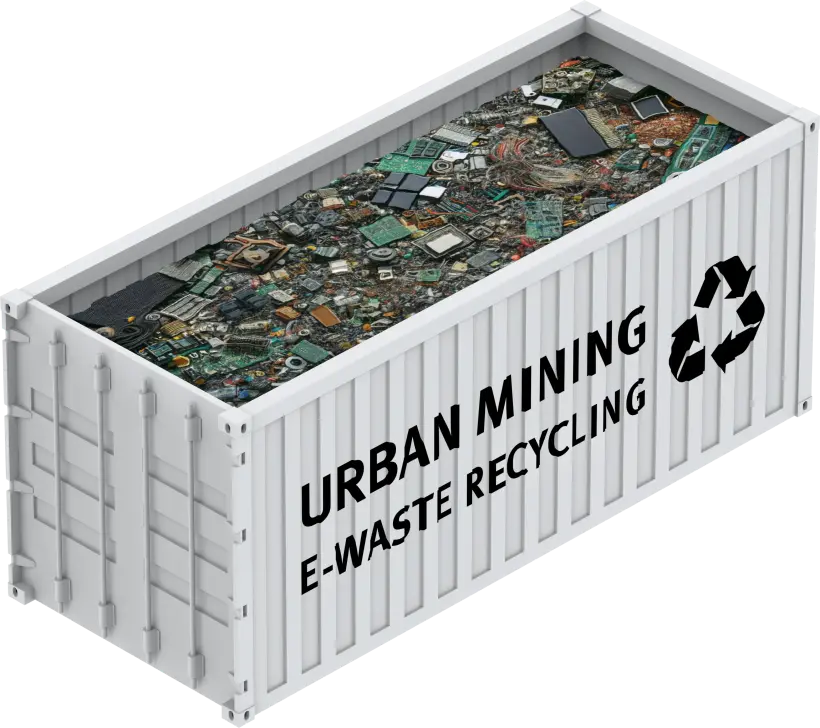
In urban mining, valuable metals and minerals are recovered from electronic waste such as circuit boards and end-of-life batteries, creating an additional raw material stream for metal production. Our automation solutions support the handling and treatment processes for these complex materials with as much reliability and process stability as in traditional mining. Pneumatic and electric components provide precise control in mechanical and hydrometallurgical steps. That is how we make sure that recovery processes across all urban-mining applications are safe, efficient, and consistent.
Find out more about automation in battery recycling
5. Coke production
Coke production is a key step in supplying blast furnaces with high-quality fuel. Each coke oven battery requires precise gas flow and pressure control to ensure stable and efficient combustion. These systems are often automated using pneumatic solutions. Our portfolio includes pneumatic actuators with integrated position encoders and modular control panels that simplify wiring, improve diagnostics, and increase overall process reliability.
Explore automation solutions for coke production

6. Auxiliary systems in blast furnace operation
Operating a blast furnace involves numerous subsystems that depend on reliable automation. Coal dust injection, syngas control, cooling circuits, and slag granulation all rely on accurate pressure and flow management. With our automation solutions, stable control, consistent performance, and efficient maintenance are guaranteed, no matter how harsh the conditions are. This supports safe, continuous operation across all auxiliary blast furnace processes.
Explore automation solutions for coal dust injection

7. Furnaces and blast furnaces
Applications in furnaces require multiple automation tasks that must be carried out safely and reliably in high-temperature environments. Burners, gas control systems, measuring equipment, and mechanical movements: All require maximum performance. This is precisely where pneumatic automation offers real benefits: It minimizes ignition risks by avoiding electrical sparks and operates continuously even under thermal stress. Our portfolio includes proven pneumatic and electropneumatic components that ensure precise control and continuous operation across all furnace technologies.
Explore automation solutions for furnaces and blast furnaces

8. Aluminium production
Automation components in primary aluminium smelters are continuously exposed to extreme heat, fine alumina dust, and strong magnetic fields. These challenging conditions place demanding requirements on equipment such as crust breakers, feeder cylinders, and pilot valves. We offer a dedicated portfolio designed to withstand these stresses and provide long-term reliability. In addition, our standard automation solutions support related processes including gas cleaning, anode handling, and furnace operation, delivering precise, robust performance throughout the aluminium production line.
Explore automation solutions for aluminium production

9. Steel production
Automation plays a vital role in both primary and secondary steel shaping processes such as continuous casting and hot or cold rolling. These demanding applications require reliable control of cooling systems, adjustment of pneumatic or servo-driven equipment, and automation of handling tasks in robotic systems. With the right combination of pneumatic and electromechanical solutions we can ensure precise motion, stable process control, and high system availability for steel production.
Explore automation solutions for steel production

10. Foundry
Foundry operations need automation solutions that maintain reliability and safety under high temperatures, heavy loads, and continuous cycles. Applications range from controlling cooling and lubrication systems to actuating moulding, casting, and handling equipment. Pneumatic and servo-driven systems provide precise motion and robust performance, while end-of-arm automation supports efficient tool handling and stacking. Our components and systems help ensure consistent process quality and high availability in every stage of foundry production.
Explore automation solutions for foundry applications


Looking for the right components?
Explore our recommended products for mining, mineral processing, and metals applications. Each item has been carefully selected for its reliability in harsh conditions and to match your requirements for precise automation. Find everything you need in our Online Shop, from actuators and valves to air prep units.
Frequently asked questions about automation in mining and metals
Why is automation important in mineral processing and metal production?
Many of these processes run continuously and often under conditions that are harsh and unsafe for both operators and the environment. Automation improves both safety and efficiency since it reduces manual interventions and stabilises performance around the clock. Festo focuses on designing cost-effective and value-adding automation concepts tailored to the demanding conditions of mining and metals applications.
What is a robust automation framework?
Automation is more than PLC software and hardware. A robust framework in mining and metals connects mechanical, electrical, and control elements into one reliable system. It ensures that equipment such as valves and actuators perform precisely within defined process limits. A comprehensive approach to automation integrates mechanical, electrical, and digital layers into one system suited for your application.
How can I make our equipment more reliable in harsh conditions?
Reliability begins with understanding the application and selecting components that match its environmental demands. Equipment performs best when it has been specifically designed for the process, rather than replicated from other systems or previous projects. Evaluating each setup individually and applying modern technologies can increase performance, simplify maintenance, and reduce long-term costs.
Can predictive maintenance be applied in the mining and metals industry?
Yes. Together with digitalization, artificial intelligence, and machine learning, predictive maintenance identifies potential failures before they affect production. Real-time data from sensors and control systems provide early warnings so that maintenance teams can act before unplanned downtime actually occurs and productivity is lost.
What’s the difference between centralized and decentralized automation in mining and metals?
Traditional centralized systems rely on individual wiring between components and a central PLC, which increases hardware and complexity. In decentralized automation, pneumatic and electric equipment is connected directly to the plant network via fieldbus interfaces. This reduces wiring effort, simplifies diagnostics, and improves flexibility in large-scale mining and metals operations.
Why is pressure control in coke production or flotation cells so difficult?
External displacement sensors used for position feedback are often exposed to extreme conditions, leading to inaccurate readings and unstable control. Integrated solutions such as the actuators DFPI from Festo have built-in position feedback or modular control panels with diagnostic options and so eliminate these issues, resulting in precise, reliable pressure control.