




 42 / 48

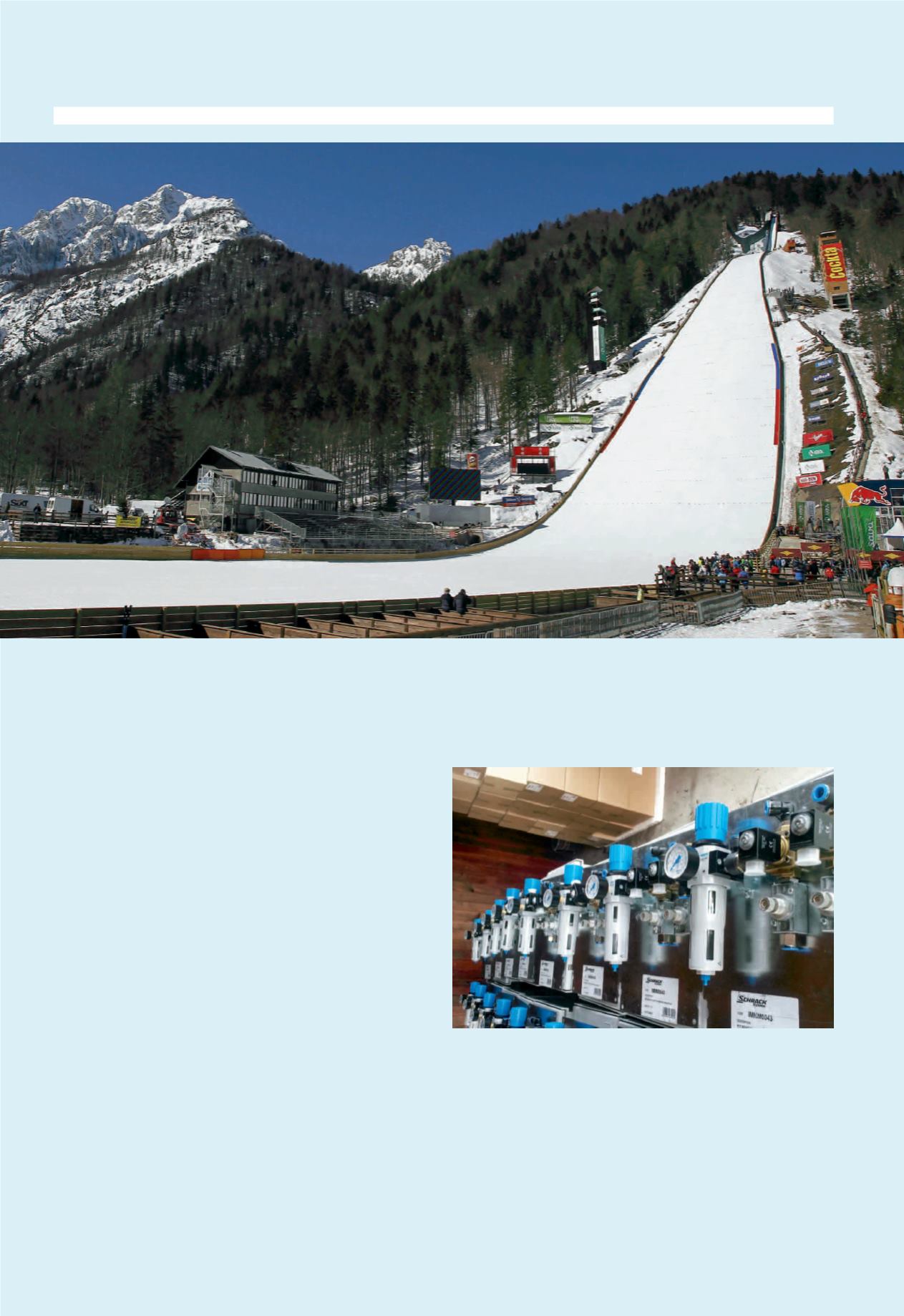
Safety in jump valley
Solenoid valves control windbreaks
Traditionally, the finale of the ski jumping world cup is held every
year in Planica, Slovenia, not far from the popular winter sports
resort of Kranjska Gora. For many years, the famous ski jumping
hill, Letalnica bratov Gorišek, was the largest in the world and
currently is the second largest. This year, the Slovenian Peter
Prevc set the record here with a jump of 248.5 metres.
Tailwinds slow down the jumpers, while updrafts help them to
achieve great distances. Both can be calculated very easily.
Crosswinds, on the other hand, cannot be calculated and when
gusty can be dangerous for the athletes. The wind acts directly
on the body; the ski jumper can be thrown off balance without
warning. Many jump complexes use windbreaks or curtains to
help with this. The same is true in Planica.
Pneumatic cylinders raise and lower the windbreak on both sides
up to a top height of 18 metres. These are controlled by Festo
solenoid valves type VZWF. With relatively small solenoids, they
control high pressures at large nominal sizes. Another advantage
is that they switch off already at 0 bar and automatically close
via the NC function in the event of a loss of pressure in the con-
trol circuit.
Slovenia
Planica is world-famous
for ski jumping and ski flying.
Solenoid valves VZWF:
behind the scenes,
they ensure safety in the event of crosswinds.