




 39 / 48

pressure regulators VPPM. Thanks to their
wide control ranges, two pressure levels
are sufficient.
In order to minimise the installation space
required, the Festo proportional pressure
regulators VPPM were integrated into a
valve terminal MPA. Together with the auto-
mation platform CPX, this forms a com-
pact solution. A pressure measurement
module CPX measures the gas input pres-
sures in the relevant installation areas.
The comprehensive monitoring made pos-
sible by this solution opens up a variety of
new diagnostic options as compared with
the previous solution.
Processes permanently in view
Festo proportional valves in combination
with flow meters and pressure sensors
are also used in the new technical centre
to supply mechanical seals. When connect-
ed to the process control system via the
CPX and the integrated fieldbus node, the
valve terminal MPA can monitor the gas
consumption of seals centrally and control
the pressure as a function of the internal
tank pressure. This continuous condition
monitoring reduces maintenance costs.
The integration of proportional valve tech-
nology from Festo offers Boehringer Ingel-
heim a huge number of advantages. The
multi-sensor control of the VPPM through
integrated pressure sensors and PID
Communication accelerates the project
Even large projects start small. The first step in the cooperation between
Boehringer Ingelheim was a telephone conversation between the head of the
industry segment Process Automation DE at Festo and the person responsible
for automation at Boehringer Ingelheim. During the subsequent meeting about
the proportional pressure valve VPPM the question was discussed as to whether
the VPPM could be used to regulate process gases and thereby regulate both the
pressure and the flow.
After the first successful tests in the Festo laboratories and on site at Boehringer,
the Festo project team and the relevant people at the pharmaceutical company
discussed how to continue their collaboration. The solution, to control the compo-
nents decentrally, seemed to be the obvious choice given the ability to deliver
complete ready-to-install, standardised control cabinets both for the reactors and
for the centrifuges and drying cabinets. In addition, Boehringer Ingelheim assigned
the Festo project team the task of project engineering and procuring the quarter
turn actuators for the system. They also had to prepare CAD drawings of the pro-
cess valves so that they could conduct the collision test for construction of the
pipeline. The close cooperation and constructive, short communication channels
saved time and costs throughout the entire process and contributed to an amaz-
ingly quick development phase for a high-performance solution.
“In each phase of the project, we felt that everyone
involved was completely committed to its success.
For us, this was the difference between having a
supplier and having a partner.”
Boehringer Ingelheim
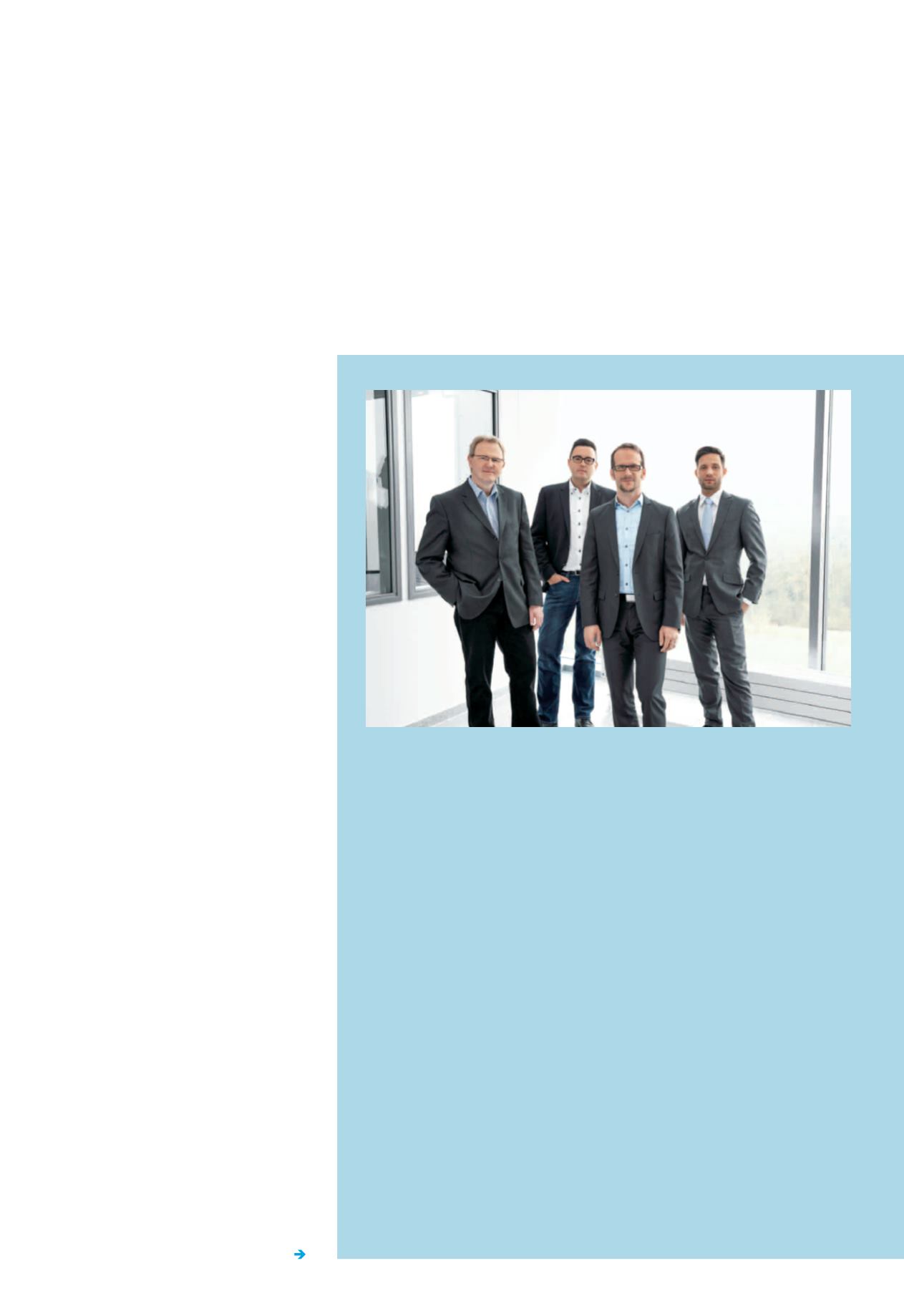
Together to the finish line:
the Festo project team for Boehringer Ingelheim.
2.2015
trends in automation
Synergies
38
–
39