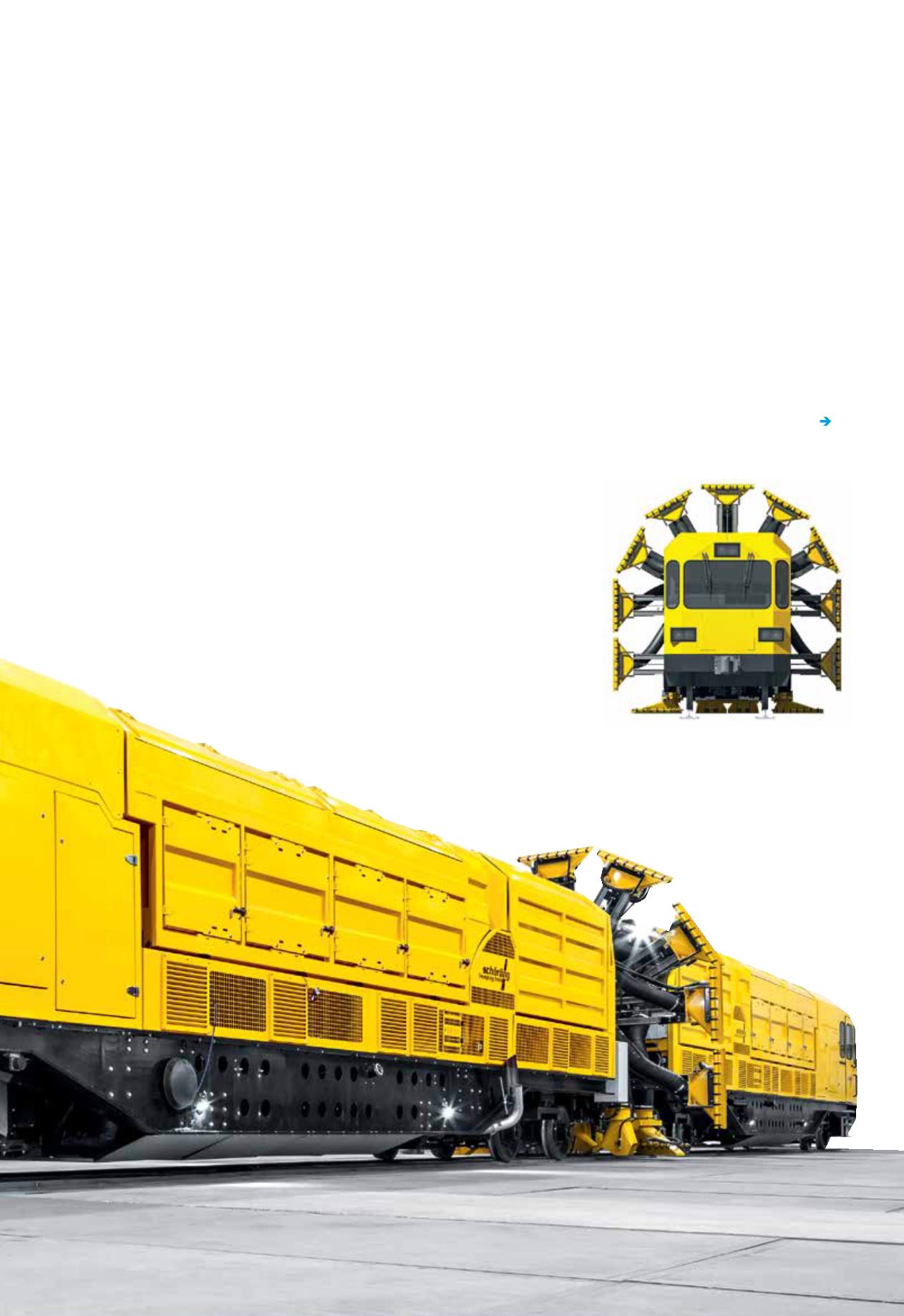
Theninesuctionnozzles
aremoved into the
requiredpositionusingservopneumatics.
Big insize, big inperformance:
Weighing inat 85 tonnesandmeasuring40metres in length, the tunnel cleaning
train removesdirt from tunnelwallsand trackbedson tracksectionsof up to5kilometreseveryhour.
E
xtensivemetroandunderground
rail networksareanessential part
of the infrastructureofmajor cities
all over theworld. Themetro
systemsof London, Beijing, Shanghai and
NewYorkCityhavenetworksextending
well over 400kilometres.Millionsof
people travel through their tunnelsevery
day. Underground rail systemsare fast,
cleanandsignificantlysafer than road
traffic. Toensure that this remains the
case, the tunnelshave tobe cleaned
regularly to removefinedust aswell as
larger itemssuchasplasticbottlesand
paper. This is the ideal job for thenew
tunnel cleaning train fromSchörling
Kommunal GmbH inHanover. Equipped
with the latest servopneumaticdrive
technology from Festo, thenewsuction
unit cleansunderground rail tunnels
faster andmore reliably thanever before.
Five cleankilometresperhour
Althoughunderground rail tunnelsget
dirtyat amuchslower rate than roads,
timeeventually leaves itsmark. Thefine
dust that isdepositedovermanyyears
poseshealth risks for passengersand
metroemployeesand increasesmachine
wear over the long term. Inmany
underground rail networks, cleaning is
still donemanually. This is time, labour
and cost intensive.
Thenew tunnel cleaning train from
Schörlingsetsnewstandards inquick
cleaning. Its innovativedry cleaning
technology removesfinedust and coarse
dirt fromup tofivekilometresof tunnel
per hour.Whennot cleaning, it can travel
at speedsof up to70km/h.
Puttingdirt under pressure
Thenew tunnel cleaning trainweighsa
full 85 tonnesand is40metres long. The
cleaningunit ispositionedbetween two
locomotives, eachofwhichhasan
identical driver’scab.The tunnel traincan
therefore travel in the requireddirection
for cleaningwithout having to turn.
Directlybehind thedriver’s cabssit the
units for thehydraulicdrive,whichcanbe
preciselyadjustedevenat lowspeeds.
Above theseare the largefilter systems
for coarseandfinedirt. Containers for
coarsedirt are followedbyfinedust filter
systems,whichareblownout oncea
predefineddegreeof contamination is
reached. Thedirt fallsdown intocollecting
bowls,whichare thenemptiedby
employees. Thanks to their state-of-the-
art cleaning technology, thefilter
elementsshould last at least fiveyears.
Each trainhalf has three fans, eachwitha
suctionof6m³/s.The fansgenerate
compressedair,which isusedby thehigh
pressure jetsof thesuctionnozzles toblast
dirt from the tunnelwalls, andavacuum,
which immediatelysucksup theswirling
dust and feeds it to thefilter systems.
Keeping theprofile inview
Witha clearanceof between100mmand
300mm, thesuctionnozzlesandsuction
feet follow the tunnelwall and track
Issue26
trends inautomation
Synergies
30
–
31


